
Guided owner tour · 5 steps
What is turning into new business?
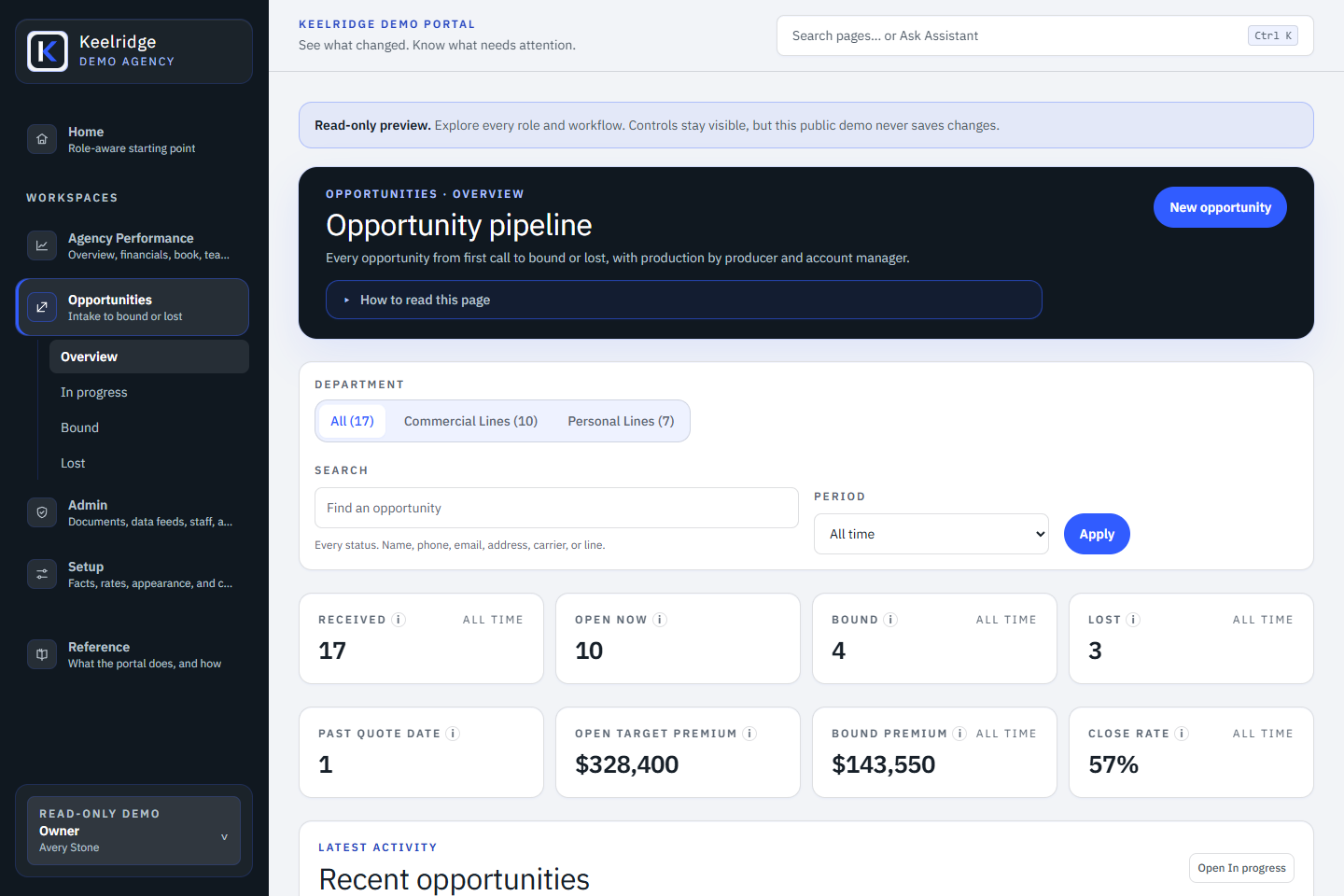
Review open opportunities, what the team has won or lost, and what later arrived in the book. Use the evidence to decide where work needs attention and how sales activity is contributing to agency growth.
KEELRIDGE SOFTWARE · REVIEWED · Screens come from a fictional, read-only agency.
 Owner viewOpen this page in the live demo →
The short answer
Review the pipeline and the book together.
Where does open work need attention?
See what is in progress, which quote dates have passed and who is responsible. Give the team a starting point for the next review.
What are we winning and losing?
Read resolved outcomes, annual bound premium and recorded loss reasons together. Inspect the opportunity behind a result.
What is contributing to growth?
Review later Book arrivals and their classification, then decide what to investigate or support next. People connect the sales and Book evidence.
Where does the open work need attention?
Start with what is in progress, what has passed its target quote date and who is responsible. Intake staff and department managers maintain the opportunity record as work happens, so the next review can start from shared evidence.
Keep one opportunity per insurable account, with the available dates, department, target premium and assignment. The overview separates activity in the selected period from the queue open now: received, bound and lost use their own event dates.
Explore the all-time opportunity view as owner →
Owner viewOpen this page in the live demo →
Are opportunities turning into wins?
Read the number of wins and losses beside close rate and annual bound premium. A high percentage on a small number of decisions tells a different story from a busy period with the same rate. Inspect recorded loss reasons when deciding where to investigate.
Close rate is bound divided by bound plus lost among opportunities resolved in the selected period. Open work stays outside the denominator. Bound premium sums annual premium on policy lines bound in that period; open target premium describes the current pipeline, not a revenue prediction.
Owner viewOpen this page in the live demo →
Who owns the work, and what context do they need?
Review received, bound and lost opportunities and annual bound premium by the producer and account manager currently assigned. Open the underlying opportunity to understand a handoff, clarify responsibility or agree the next action.
Owners and executives can review both departments. Department managers and authorized intake staff work within their permitted department scope.
Inspect production by producer in the fictional owner demo →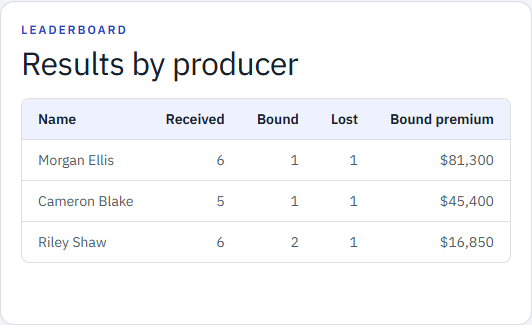 Owner viewOpen this page in the live demo →
What actually showed up in the book?
Read the opportunity result alongside later AMS Book movement. A bound line may appear only after its effective date and a later export. Book arrivals can include genuinely new customers, reactivations or acquired business; a changed policy number may be a remarket for a customer already retained.
The two views answer different questions. Keelridge does not automatically match a bound opportunity to an AMS arrival. People investigate timing and classification before treating pipeline production as genuine customer growth.
Why policy-level reporting inflates new business →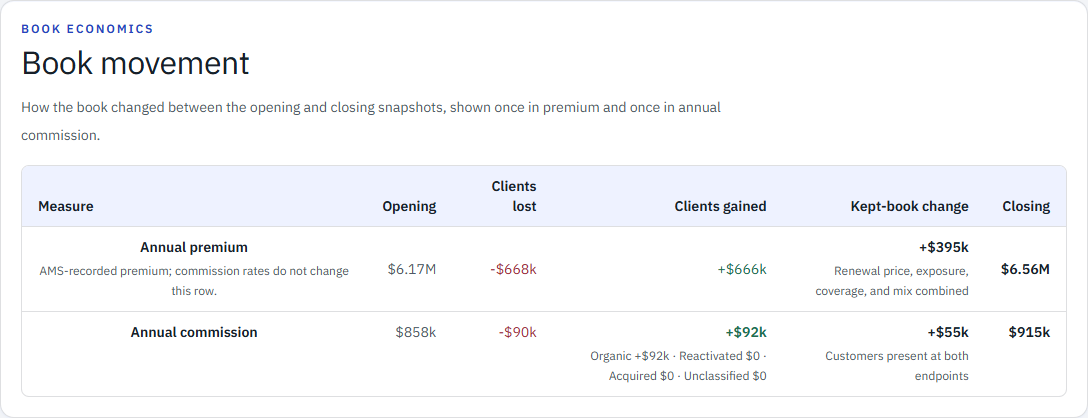 Owner viewOpen this page in the live demo →
Keep the evidence current. Agree what happens next.
Answering what is open and what the agency is winning should not require asking each person to rebuild a report. People maintain opportunities as work happens. Authorized staff upload supported AMS Book reports, review validation and confirm the update, keeping the separate movement evidence current.
Use the recurring management review to decide where the team needs help, which losses deserve investigation and what later Book growth needs explaining. One agency context supports financial, book and team review, with the views and context each role needs. People own status changes and follow-through; authoritative policy and service work stays in the AMS.
See the point-to-point Book movement formula →Before drawing a conclusion
Keep sales activity and book growth clear.
- Compare the right dates and basis.Received, bound and lost use their event dates. Open work is a current queue; reported bound premium is annual.
- Classify what entered the book.A policy number alone cannot establish a new customer relationship. Keep remarkets, rewrites, reactivations and acquisitions distinct.
- Bring human context to responsibility.Assignment shows responsibility for the record; it does not establish who caused a win or loss. Handoffs, role, tenure and opportunity mix matter before judging a person.
- Keep decisions with the agency.People record outcomes and own follow-through. The tracker does not quote, send reminders, change status automatically or write to the AMS.
Questions from agency owners
Before using pipeline activity as a growth measure.
How should an insurance agency track genuine new business?
Keep one opportunity per insurable account, with its dates, responsibility and human-owned outcome. Review open work alongside received, bound and lost activity for a named period. Then inspect later AMS Book movement to distinguish genuinely new customers from reactivations, acquired arrivals and changes on existing customers. Keelridge does not automatically match a bound opportunity to an AMS arrival.
Read the note →What is an insurance agency close rate?
Close rate is bound divided by bound plus lost among opportunities resolved in the selected period. Bound uses the date marked bound; lost uses the date marked lost. Open opportunities stay outside the denominator. If nothing was resolved, the rate is unavailable rather than zero. Read volume and annual bound premium beside the percentage.
Why can bound premium differ from new premium in the AMS Book?
The tracker reports annual premium derived from the bound policy lines people record. For a six-month line, that annual amount is twice the entered term premium. Older lines without a recorded term retain their annual basis. The AMS Book shows policies present in a later snapshot. Effective dates, entry timing, cancellations and policy changes can create differences; the agency investigates them without an automatic record match.
Does a new policy number prove new business?
No. A carrier remarket or rewrite for an existing customer can create a new policy number without creating a new customer relationship. Customer identity and additional classification are needed before the arrival should be called organic new business.
Read the note →Your agency’s growth questions
Start with the new-business review you want to improve.
Book a 30-minute owner walkthrough using fictional agency data. Discuss how you review open work, wins and losses today, where the management picture gets rebuilt by hand and who needs the resulting context. No agency files are needed for the conversation.
Review the design-partner pilot terms →